
TPO Launches “Good Tourism” Vision as the 10th TPO Forum Concludes in Taichung
- Held on 16–18 September, the Forum brought together approximately 350 participants, with representation from 21 cities and 100 tourism businesses.
- Five pillars—local economy, residents, environment, culture and governance—broaden the focus of urban tourism performance.
- 49 G2B and B2B meetings and eight bilateral city meetings connected the tourism vision with practical cooperation.
- Busan, Gimhae, Ulsan, Kota Kinabalu and Tay Ninh took part in AI tourism policy consultations, exploring destination marketing responses to the rise of generative AI.
- Ulsan will host the 11th TPO Forum in 2028, following the Forum flag handover in Taichung.

The Tourism Promotion Organization for Global Cities (TPO) has officially launched “Good Tourism,” a new tourism vision that looks beyond visitor numbers to the lasting value tourism creates for cities and their communities.
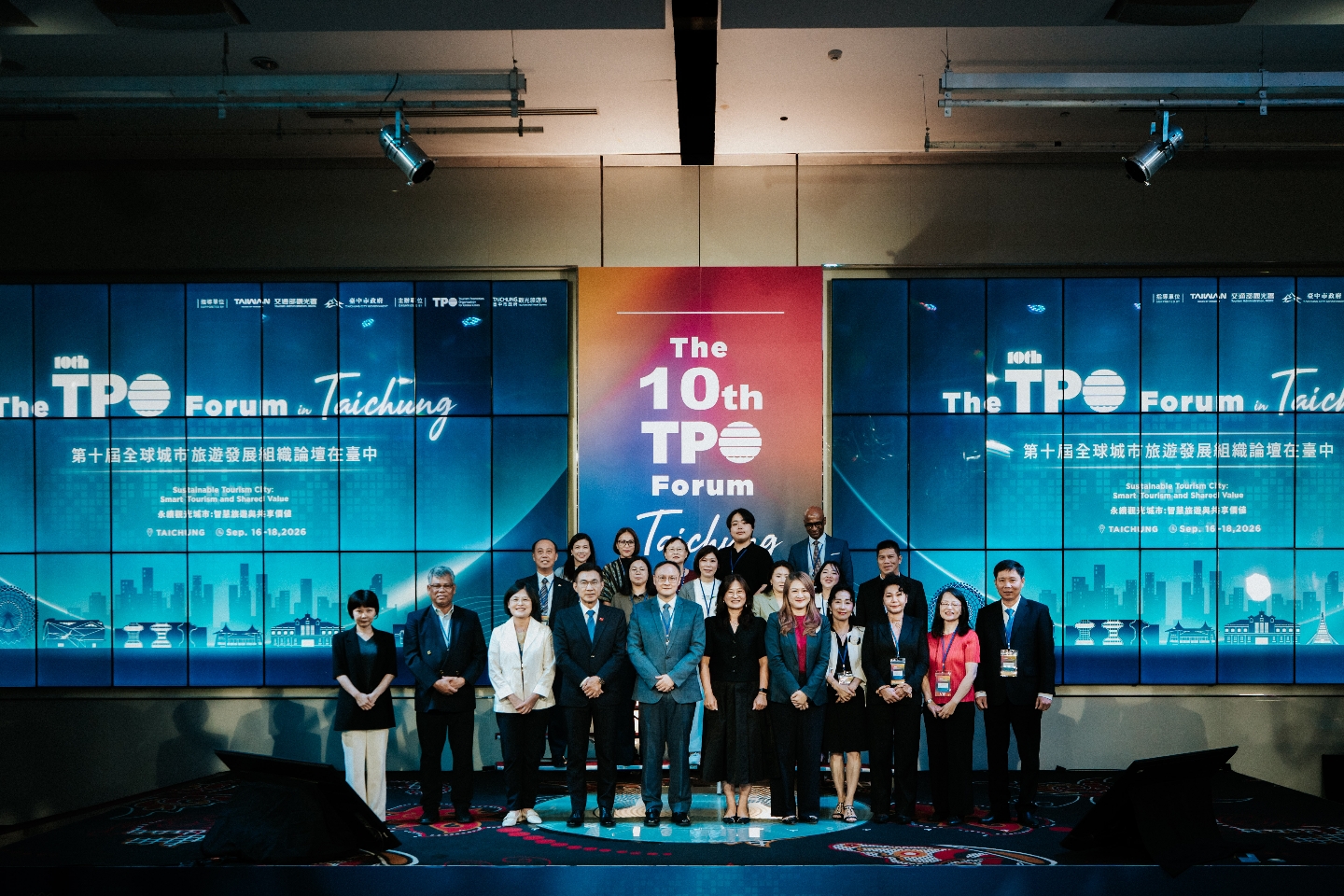
The announcement marked a central outcome of the 10th TPO Forum, held from 16 to 18 September 2026 at The Lin Hotel and other venues in Taichung, Chinese Taipei. The Forum set out new directions for urban tourism and expanded opportunities for cooperation between cities and the tourism industry.
This marked the first official TPO event to be held in Taichung since the organization was established in 2002. Under the theme “Sustainable Tourism City: Smart Tourism and Shared Value,” it brought together approximately 350 participants, including delegations from 21 cities and representatives of international organizations, academia and the tourism industry.
The opening ceremony on 17 September was attended by Cheng Chao-Hsin, Deputy Mayor of Taichung; Kang Da-eun, Secretary General of TPO; and Huang Ho-Ting, Deputy Director-General of the Tourism Administration, Ministry of Transportation and Communications, alongside city and tourism industry representatives.
▶ What Remains After Visitors Leave? TPO Introduces “Good Tourism”
A highlight of the Forum was the official launch of Good Tourism, with participating city delegations joining the announcement. This marked the first time since its establishment in 2002 that TPO had formally articulated an organization-wide tourism vision. Presented as a shared direction for member cities, Good Tourism places the value retained by local communities at the heart of tourism policy, alongside growth in tourism activity.
The concept recognizes that visitor arrivals and expenditure alone cannot fully explain tourism’s impact on cities and communities. It calls on cities to consider not only how many visitors arrive, but also how much tourism revenue stays in the local economy, whether residents’ quality of life improves, and whether the environment and cultural heritage are protected.
TPO developed the five pillars of Good Tourism with academics and urban tourism practitioners during a special session at the Asia Pacific Tourism Association (APTA) Annual Conference in July. These are Local Economic Retention; Resident Quality of Life and Social Carrying Capacity; Regenerative Environmental Stewardship; Cultural Authenticity and Preservation; and Good Governance and Democratic Accountability.
Following the launch, TPO will work with member cities to develop practical approaches to integrating these pillars into tourism policy.
▶ From Vision to Policy: Bringing Sustainability and AI into Urban Tourism
The Forum explored the policy implications of Good Tourism and how cities and businesses can put its principles into practice.
In Session 1, Albert Salman, CEO of Green Destinations, delivered the main presentation on the transition towards sustainable urban tourism. He addressed environmental, social and governance (ESG) principles, low-carbon tourism, the protection of local culture and the environment, and strategies to prevent overtourism.
The panel featured Liao Hsiu-Mei, Chairman of Howard Resort Xitou, and Tsai Tzu-Chien, Chairman of the Taiwan Travel Industry Association for National Tourism Development. Liao shared examples of using smart technology to improve guest experiences and strengthen community partnerships. Tsai discussed tourism product development in response to growing demand for sustainability and more immersive travel experiences.
Organized by TPO, Session 2, “From Growth to Value: Building Good Tourism Cities,” focused on translating the newly announced vision into urban tourism policy.
Professor Yulan Yuan of Tunghai University explained why growth indicators based on visitor numbers and expenditure are insufficient to assess urban tourism performance on their own. She outlined ways to apply the five pillars of Good Tourism to tourism policy.
Indhran Seghar, Founding Director of AIR APAC, then presented “How Does AI See Our City?” Drawing on diagnostic findings, he examined how cities appear in generative AI search results and recommendations. His presentation explored the factors shaping destination competitiveness in the AI era and their implications for urban tourism policy and destination marketing.
Representing the host city, Taichung Vice Mayor Cheng Chao-Hsin delivered a presentation titled “Global Green Destination: Taichung in Action.” Framed around the five pillars of Good Tourism, the presentation highlighted Taichung’s local tourism assets, including cycling routes, the Taichung International Flower Carpet Festival, the Huanshan Hunter Trail, and Houli Horse Ranch. Vice Mayor Cheng also shared the city’s progress in advancing sustainable tourism, including its achievement as the first destination in Chinese Taipei to receive the Green Destinations Bronze Award.
Closing the session, TPO Secretary General Kang Da-eun called for cities to broaden their central tourism policy question from “How many visitors came?” to “What remains in the city after visitors leave?” She outlined five shifts: from visitor numbers to value retained by cities; from destination promotion to urban transformation; from tourist attractions to local life; from smart technology to better decision-making; and from competition between cities to cooperation.
She also called for TPO to evolve beyond exchanges and promotion into a network for shared policy learning, experimentation and the exchange of results. Under this approach, each of TPO’s 119 member cities would become a testing ground for solutions to its own tourism challenges, enabling one city’s experience to inform another’s response.
▶ From Hosting Events to Strengthening Local Economies: New Directions for Urban MICE
The MICE Roundtable explored the future of the meetings, incentives, conventions and exhibitions sector, focusing on hybrid event formats and sustainability. Chairing the discussion, Deputy Mayor Cheng introduced strategies to strengthen Taichung’s competitiveness in the global MICE market.
Carl Wegner, President of the American Chamber, examined changing corporate demand for MICE events and the local market’s strengths and challenges. Hafiz Hazin, Director of the Tourism Malaysia Taipei Office, shared international event attraction strategies and experience in developing sustainable MICE destinations, including green venue certification. Shen Fang-Cheng, Chair of Hotel Royal Group, presented examples of hybrid event operations and innovation in facilities and services.
Participants explored ways to connect MICE events with urban tourism and local industries, helping visitor stays and spending generate wider benefits for local economies.
▶ 49 Business Meetings and AI Consultations for Five Cities Expand Practical Cooperation
Policy exchanges, business meetings and AI consultations gave participating cities and businesses opportunities to explore partnerships and address practical challenges.
On 16 September, the Forum introduced its first Special Session on Cooperation & Partnership bringing together member and non-member cities from the host region. Member cities including Taichung and Kaohsiung, alongside invited non-member cities such as Taoyuan, presented their smart and sustainable tourism policies and areas of interest for cooperation.
Delegations from member cities in the Republic of Korea, Malaysia and Viet Nam attended, together with tourism businesses including HanaTour and PanStar Cruise. Follow-up discussions chaired by Secretary General Kang covered the sharing of Taichung’s good practices, cooperation linked to the Kaohsiung International Travel Fair, and the development of B2B connections for Taoyuan. The TPO Secretariat will support further coordination between cities and industry partners to advance these opportunities.
At the city tourism policy briefing held the same day, seven cities—Ulsan, Gimhae, Kaohsiung, Taichung, Kota Kinabalu, Ipoh and Alor Setar— presented their tourism policies, key assets and cooperation initiatives to approximately 50 local businesses. The subsequent government-to-business (G2B) and business-to-business (B2B) program facilitated 58 meetings. Four bilateral meetings were held between cities, while 12 organizations and businesses exhibited at the tourism roadshow.
Five member cities and regions—Busan, Ulsan and Gimhae; Kota Kinabalu; and Tay Ninh Province— also took part in the Forum’s first AI tourism policy consultation program. Each received an assessment of how it was represented as a destination in generative AI search results and recommendations, together with advice on improving tourism information and identifying priorities for action.

▶ 47th Executive Committee Meeting and Excellence Awards Highlight Member Engagement
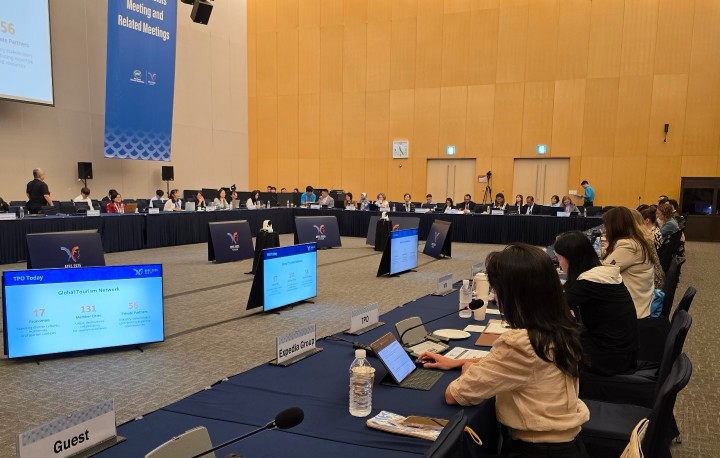
The 47th TPO Executive Committee Meeting, held during the Forum, reviewed and approved the 2027 work plan and the admission of six new members – Busan Dong-gu, Sacheon city, Quang Tri Province, Hongseong Cultural City Center(HCCC), SLASH B SLASH CO., LTD, KOncierge Corp.
At the networking dinner on 16 September, the TPO Excellence Awards recognized member cities for their contributions to the organization’s activities. Regional Cooperation Awards were presented to Tay Ninh Province, Viet Nam, and Alor Setar, Malaysia.
Outstanding Member Awards recognized Kota Kinabalu, Malaysia, in the meetings category; Gimhae and Busan, Republic of Korea, in the programs category; and Ipoh, Malaysia, in the promotion category.
▶ From Taichung to Ulsan: The 11th TPO Forum in 2028
At the farewell dinner on 17 September, Taichung handed over the Forum flag to Ulsan Metropolitan City, which will host the 11th TPO Forum in 2028. TPO’s General Assembly will take place in Gimhae in 2027.
On the final day, approximately 100 participants joined four groups for technical visits to Taichung’s key tourism sites, gaining first-hand insight into the city’s tourism resources and policies in practice.
“We are not building cities for tourists; we are building good cities for people,” said Secretary General Kang. “When a city is a good place for the people who live there, it becomes a place that people from around the world want to visit.”
“One city’s experience can become another city’s solution,” she added. “We will work with TPO member cities to ensure that tourism contributes not only to economic growth, but also to local communities, the environment and the long-term development of cities.”
Deputy Mayor Cheng said: “As the global tourism market changes rapidly, urban tourism can no longer focus solely on increasing visitor numbers. It must also take account of residents’ lives, local industries, the environment and culture.”
“We hope this Forum will encourage more people from around the world to discover Taichung and help connect Taichung’s tourism sector with the world,” he added.
Website: https://tpogc.org/forum-detail/
Leave a Reply