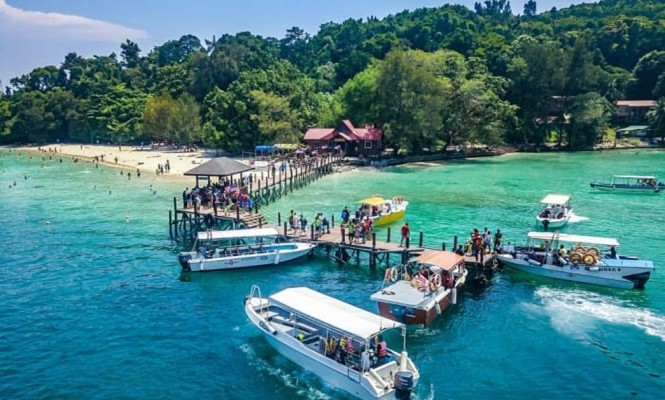

Sapi Island, Kota Kinabalu
Kota Kinabalu, the capital of Sabah, Malaysia, continues to advance as a vibrant coastal city through ongoing efforts to enhance urban connectivity, tourism infrastructure, and visitor experience. In alignment with the upcoming Visit Malaysia Year 2026 (VM2026), the city actively supports broader state and national tourism initiatives while strengthening its role as a key gateway to Sabah.

Jetty, Kota Kinabalu
At the city level, recent developments have focused on improving accessibility and overall travel experience. The South Jetty Terminal, relocated to Kota Kinabalu Port and operational since 1 March 2026, now serves as the primary gateway to the Tunku Abdul Rahman Marine Park—including Manukan, Sapi, Mamutik, and Gaya Islands— offering improved passenger handling and operational efficiency.

Complementing this development, Kota Kinabalu City Hall (DBKK) has introduced a new city jetty along the waterfront, enhancing last-mile connectivity and enriching the overall visitor experience, while supporting the city’s long-term vision of a more vibrant and accessible coastal tourism ecosystem. Enhancements to the public transportation network, including the introduction of 48 buses, have further improved connectivity and ease of movement within the city.

The city is also progressing towards becoming a smart and digitally enabled urban centre. Through a collaborative smart city initiative led by Kota Kinabalu City Hall (DBKK), ongoing efforts include the planned expansion of smart CCTV systems and the strengthening of an integrated operations framework to support real-time monitoring and urban management.

These initiatives are expected to enhance public safety, particularly in key tourism areas, while improving overall city governance. Kota Kinabalu continues to benefit from and support wider promotional efforts such as the “Explore Sabah” campaign, which highlights diverse travel experiences across the state. As the main entry point to Sabah, the city plays a key role in facilitating access to island, nature, and cultural tourism offerings. The city also maintains a dynamic calendar of events that contribute to its tourism appeal. Cultural celebrations such as the Kaamatan Festival, alongside international events including the Borneo International Marathon, Sabah Fest, and KK Jazz Festival, continue to attract both domestic and international visitors. In addition, Kota Kinabalu is strengthening its tourism offerings through the enhancement of urban green spaces and emerging niche segments, including the development of the Tun Fuad Stephens Botanical Garden and growing interest in premium seafood experiences. 1 Kota Kinabalu continues to position itself as a connected, smart, and experience driven coastal destination, where urban development and natural ecosystems coexist sustainably.



Leave a Reply